Liposuction Michigan: Key Facts About Tumescent Techniques
When people start researching body contouring, they often focus on before and after photos first. That is understandable, but the more important question usually comes earlier: how is the procedure actually performed, and what does that mean for safety, recovery, and results? For anyone considering Liposuction Michigan practices commonly offer, the tumescent technique deserves close attention because it changed the way liposuction is done in modern outpatient surgery.
Tumescent liposuction is not simply a brand name or a marketing phrase. It refers to a specific method in which a large volume of diluted local anesthetic solution is placed into the fatty tissue before fat removal begins. That solution typically includes saline or lactated fluid, lidocaine for numbing, and epinephrine to reduce bleeding by constricting small blood vessels. The treated area becomes swollen and firm, which is exactly what the word "tumescent" points to. That firmness matters. It helps separate fat cells, improves comfort, and often allows for smoother, more controlled removal.
Patients often come into consultation assuming all liposuction is basically the same. In practice, it is not. Technique influences blood loss, bruising, downtime, anesthesia choices, and sometimes the precision of contouring. If you are comparing options in Michigan, understanding what tumescent liposuction does, where it works best, and where it has limits will make you a better judge of the recommendations you hear.
Why the tumescent approach became the standard in many cases
Older liposuction methods were associated with more bleeding and a rougher recovery. Tumescent infiltration improved that significantly. By filling the tissue with anesthetic fluid before suctioning, the surgeon can often work with less trauma to the surrounding structures. In well-selected cases, that means less bruising than many patients expect and a lower likelihood of major fluid shifts compared with older approaches.
That does not make the procedure casual or minor. Liposuction is still real surgery. Cannulas are passed through tissue, fat is removed permanently, and judgment matters at every step. The value of the tumescent method is that it tends to give the surgeon a more controlled environment. The tissue is numb, blood vessels are constricted, and the fatty layer is more receptive to even extraction. Those advantages are why the technique has remained central for many board-certified plastic surgeons and other properly trained specialists.
In Michigan, where patients seek liposuction for the abdomen, flanks, thighs, upper arms, neck, and under-chin area, tumescent technique is especially common because many of these procedures are done in accredited outpatient settings. Local anesthesia with sedation, or local anesthesia alone in select smaller cases, can be an appealing alternative to general anesthesia for the right patient. That said, not every patient is a candidate for every anesthesia plan, and the procedure plan should always match the anatomy, medical history, and scope of treatment.
What actually happens during tumescent liposuction
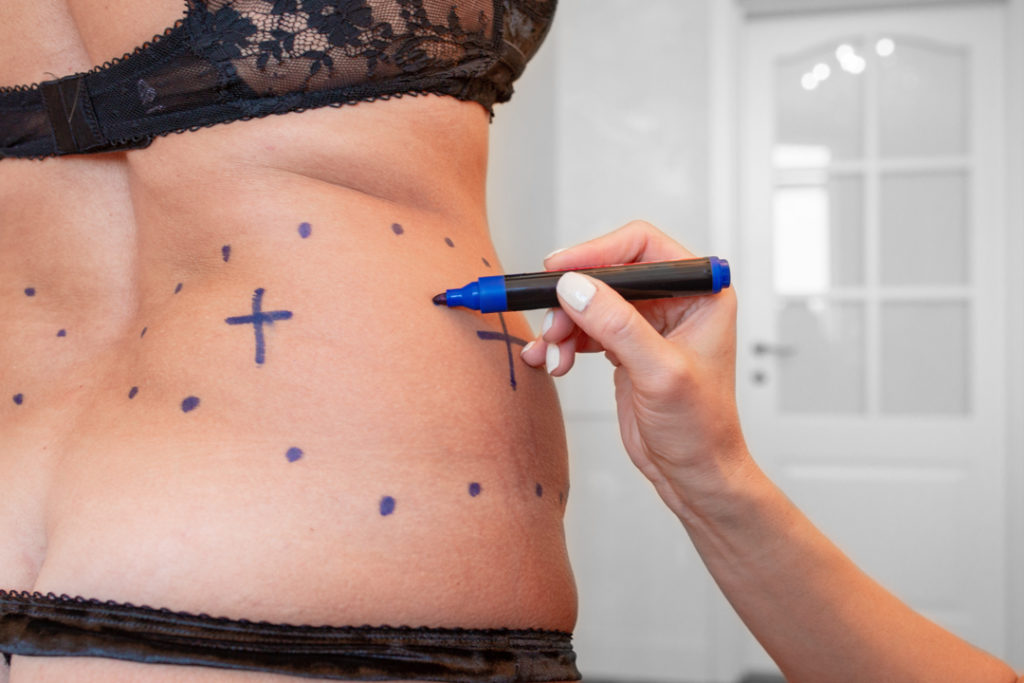
A lot of anxiety disappears once patients understand the sequence. The day usually starts with markings while the patient is standing. Those markings are more important than most people realize because the body looks different lying down than it does upright. The surgeon maps not only where fat is prominent, but also where restraint is needed. Good liposuction is not about removing the maximum amount of fat. It is about preserving shape.
Once the area is prepped, the tumescent fluid is infiltrated through small access points. This part can take time, especially in larger areas. Then there is typically a waiting period to allow the anesthetic and vasoconstrictive effects to develop fully. Rushing through this stage is poor practice. Patience here usually pays off in smoother surgical conditions.
The fat is then removed through slender cannulas attached to suction. Different surgeons prefer different cannula sizes and patterns of movement depending on the body area. For example, the neck calls for finer control than the lower abdomen. The outer thighs demand contour judgment because over-resection can create dents that are difficult to correct. The flanks often improve dramatically, but the amount removed must still respect the quality of the overlying skin.
At the end of surgery, small incisions may be left open briefly for drainage or loosely closed, depending on the approach. Compression garments are usually placed immediately. Patients often notice fluid drainage in the first day or two, which can look alarming if they were not warned about it in advance. It is common and usually expected.
The areas where tumescent liposuction performs best
Not every body concern is a liposuction problem. Tumescent liposuction works best for localized fat deposits that have not responded to stable diet and exercise habits. It is often very effective for a lower abdomen pouch, waist fullness, bra roll area, inner or outer thighs, upper arms, and the submental area beneath the chin.
Results depend heavily on skin quality. This is one of the biggest points of confusion in consultation. Fat removal reduces volume. It does not tighten skin with the same power as an excisional surgery. A patient in their early thirties with dense skin tone and a modest lower abdominal fullness may see a smooth contraction after liposuction alone. A patient in their late fifties with thin skin, stretch marks, and abdominal laxity after multiple pregnancies may not. In the second case, removing fat without addressing loose skin can leave the patient disappointed even if the surgery itself was technically sound.
That distinction matters in Michigan practices because many patients seeking Liposuction Michigan options are balancing multiple life factors, work schedules, family obligations, and recovery time. A shorter recovery can sound attractive, but choosing liposuction when a tummy tuck or arm lift is actually the better fit often leads to an underwhelming result.
What tumescent liposuction is not designed to do
It is not a weight-loss procedure. The best candidates are usually near a stable, realistic body weight and bothered by stubborn contours rather than general obesity. It is also not a treatment for poor skin elasticity, advanced cellulite, or muscle separation in the abdomen. Some of these issues can improve a little if excess fat is reduced, but they do not reliably disappear.
A common consultation moment goes like this: a patient pinches lower abdominal skin and asks if liposuction will "tighten all this." If what they are pinching is mostly skin and not much fat, liposuction may actually make that looseness more noticeable. A careful surgeon says so, even if it means the patient chooses a different procedure or postpones surgery.
Another misconception is that liposuction is somehow permanent no matter what happens afterward. The fat cells removed are gone, but the remaining fat cells can still enlarge with weight gain. If a patient gains a substantial amount of weight after surgery, the contour changes can be noticeable. The body may still look proportionally better than before, but liposuction is not protection against future changes.
Safety depends on more than the label "tumescent"
Patients often hear that tumescent liposuction is safer, and in many settings that is true, but safety does not come from the word alone. It comes from dosing, patient selection, sterile technique, careful fluid management, operative time, and an honest understanding of how much can be treated in one session.
Lidocaine dosing in tumescent surgery is one example. The solution is diluted, and the absorption pattern differs from standard injection, but that does not mean there is unlimited room for error. Experienced surgeons calculate carefully, account for the patient's size and medical conditions, and stay within defensible parameters. The same applies to total aspirate volume, postoperative monitoring, and whether a case belongs in an office procedure room or an accredited surgical facility with a broader support team.
Some patients are better served by staged procedures rather than one long session. That can be hard to hear because many people want to "do everything at once," especially if they are taking time off work. Yet shorter, more focused surgery is sometimes the wiser decision. Good judgment in aesthetic surgery often looks conservative in the moment and impressive six months later.
The role of anesthesia, and why it matters to recovery
Tumescent liposuction can sometimes be performed using local anesthesia alone, particularly for smaller areas in calm, well-prepared patients. More commonly, local anesthesia is combined with oral medication or IV sedation. Larger or combined procedures may still involve general anesthesia. The point is not that one option is universally better. The point is that the tumescent technique broadens the choices.
This flexibility can affect recovery. Patients treated under local anesthesia or light sedation may feel less groggy afterward and can avoid some of the side effects associated with general anesthesia. For the right patient, that can mean a smoother first day. Still, comfort during surgery matters too. A patient trying to endure extensive treatment while underprepared for the experience is not benefiting from a theoretical anesthesia advantage.
In practice, the best anesthesia plan is the one that allows safe surgery, adequate comfort, and precise work. That decision should come from a real discussion, not a blanket promise.
Recovery tends to be more manageable than patients fear, but not effortless
The first few days often surprise patients because the discomfort is less "sharp surgical pain" and more soreness, stiffness, swelling, and pressure. Many describe it as the feeling after an intense workout layered with bruising. The treated areas can feel firm or lumpy for a while. That is normal healing, not usually a sign that something went wrong.
Swelling is the longest part of the story. Early improvement appears quickly because volume has been removed, but final contour takes time. At two weeks, most patients can tell something has changed. At six to eight weeks, clothing fit often improves noticeably. At three to six months, the shape becomes more refined. In some body areas, especially the abdomen and flanks, subtle softening continues beyond that.
Compression garments help, but patients should not think of them as magic. They support the tissues and can make swelling more tolerable, yet they do not replace surgical technique. If the contour is irregular in the operating room, a garment will not fix it later.
Here are the points I usually emphasize when explaining recovery expectations:
- Plan for drainage, swelling, and bruising in the first week, because they are common and can be messy.
- Walk early and regularly, even if you are sore, because light movement supports circulation and lowers risk.
- Expect numbness or firmness to linger longer than pain, sometimes for weeks to months.
- Judge the result slowly, not day by day, because swelling can distort the picture.
- Contact your surgeon promptly if you develop asymmetrical swelling, shortness of breath, fever, or worsening pain.
That last point may sound obvious, yet it is one of the most important. Patients are often excellent at tolerating discomfort and poor at recognizing when something has crossed into abnormal.
Contour quality is the real mark of skill
Many people shopping for Liposuction Michigan providers ask one broad question: "How much do you take out?" A better question is how the surgeon creates a balanced contour. Volume alone is not the goal. The best liposuction is often hard to identify as surgery because it looks natural.
This is where artistic restraint comes in. The abdomen should transition smoothly into the flanks. The inner thighs should narrow without creating friction ridges or hollow channels. The chin and jawline should sharpen without looking overdone or tethered. Men and women often need different contour patterns Liposuction Michigan because the ideal silhouette differs. Athletic patients with visible muscle definition need a different level of precision than patients seeking softer, subtle change.
The hardest cases are not always the largest ones. Revision liposuction can be far more technically demanding than primary surgery because scar tissue distorts the plane, blood supply may be altered, and previous over-resection can leave too little fat in key areas. Tumescent technique still helps in revision settings, but expectations need to be particularly realistic.
How to tell whether you are a good candidate
Suitability comes down to anatomy, health, expectations, and timing. A healthy patient with stable weight, localized fat deposits, decent skin elasticity, and a clear reason for wanting treatment is often a strong candidate. A patient expecting liposuction to rescue major weight gain, severe skin laxity, or long-standing body image distress may michellehardawaymd.com Liposuction Michigan need a different plan, or sometimes no surgery at all.
Pregnancy plans matter. Major weight fluctuations matter. Smoking or nicotine use matters because healing and circulation can be affected. So do medications, clotting history, diabetes control, and prior surgeries in the same area. The safest consultations are not sales conversations. They are filtering conversations.
If you are evaluating surgeons, these questions tend to reveal more than a glossy website does:
- How often do you perform tumescent liposuction in the areas I want treated?
- What anesthesia do you recommend for my case, and why?
- Am I a better candidate for liposuction alone or for a skin-tightening or excisional procedure?
- What are the most likely trade-offs in my specific anatomy?
- How do you handle irregularities, revisions, or concerns during recovery?
A strong consultation usually leaves you feeling informed rather than persuaded.
Michigan-specific considerations patients sometimes overlook
Climate and lifestyle may sound peripheral, but they affect planning. Compression garments in summer can be uncomfortable, especially for patients working on their feet or commuting in warm weather. Winter can make layering easier but may also discourage walking if sidewalks are icy. These are not major medical issues, yet they influence comfort and compliance.
There is also a practical point about travel. Some patients live far from metropolitan centers and drive several hours for surgery. That can be fine, but follow-up should be realistic. Early postoperative visits matter. If a practice feels impossibly far once you are sore and swollen, that is worth considering beforehand.
Michigan patients also tend to ask about returning to active routines, especially gym training, skiing, cycling, golf, and lake-season activities. The answer depends on treatment area and extent, but most people can resume light movement quickly and more vigorous exercise over a few weeks, not a few days. Anyone promising instant normalcy is overselling it.
Cost, value, and what the quote should actually include
Liposuction pricing varies by region, surgeon experience, facility costs, anesthesia type, and number of areas treated. A low quote is not necessarily a bargain, and a high quote is not automatically better care. The details matter. Patients should know whether the estimate includes the surgeon's fee, facility fee, anesthesia, garments, routine follow-up, and revision policies.
The larger issue is value. In body contouring, the cheapest route can become the most expensive if it leads to revision surgery, prolonged downtime, or disappointment. Tumescent liposuction, when done thoughtfully, often provides meaningful contour change with less disruption than more invasive surgery. That balance is part of its appeal. Still, good value comes from fit, not just price. The right procedure in the right hands is what saves money and regret over time.
Results that age well usually start with realistic planning
Patients sometimes think the best result is the most dramatic one at six weeks. I would argue the best result is the one that still looks balanced years later. Tumescent liposuction can produce that kind of durable improvement when the plan respects anatomy instead of fighting it.
The most satisfied patients usually share a few traits. They understand that liposuction is contouring, not transformation. They choose surgery to refine an area that has bothered them consistently, not because of a short-lived deadline or comparison. They allow recovery to unfold without constant panic. And they accept that "better" is often the right goal, while "perfect" is not available in living tissue.
For anyone researching Liposuction Michigan options, that perspective is useful. The tumescent technique is important because it improved safety, comfort, and precision for many patients. But technique alone does not guarantee success. The real difference comes from matching that technique to the right anatomy, the right setting, and the right expectations. When those pieces line up, the results can feel not only visible in the mirror, but quietly practical in everyday life, a waistband that sits better, a profile that looks cleaner, a shape that finally reflects the effort the patient has already been putting in.
Aesthetic Plastic Surgery & Laser Center, Michelle Hardaway M.D.
27920 Orchard Lake Rd, Farmington Hills, MI 48334, United States
+1 248-221-1957
FAQ About Liposuction Michigan
Is 55 too old for liposuction?
Age 55 alone does not determine suitability. A surgeon evaluates overall health, skin quality, healing risks, and realistic goals. A personal consultation is needed to assess candidacy and discuss alternatives.
What happens 10 years after liposuction?
Contour improvements can last, especially with stable weight. Aging, pregnancy, and weight changes can alter the appearance over time. Results vary, and liposuction does not prevent future body changes.
Can lipo get rid of an apron belly?
Liposuction reduces localized fat but does not remove hanging excess skin. An apron belly may require assessment for a skin-removal procedure instead of, or alongside, fat removal. A qualified plastic surgeon can explain appropriate options and their risks.